How to store vinyl records Records straight, clean and safe: the rules for a collection that lasts
Vinyl records last for decades if you store them well. A few rules are enough: keep them upright, away from heat, in the right sleeves and on furniture that can carry their weight.
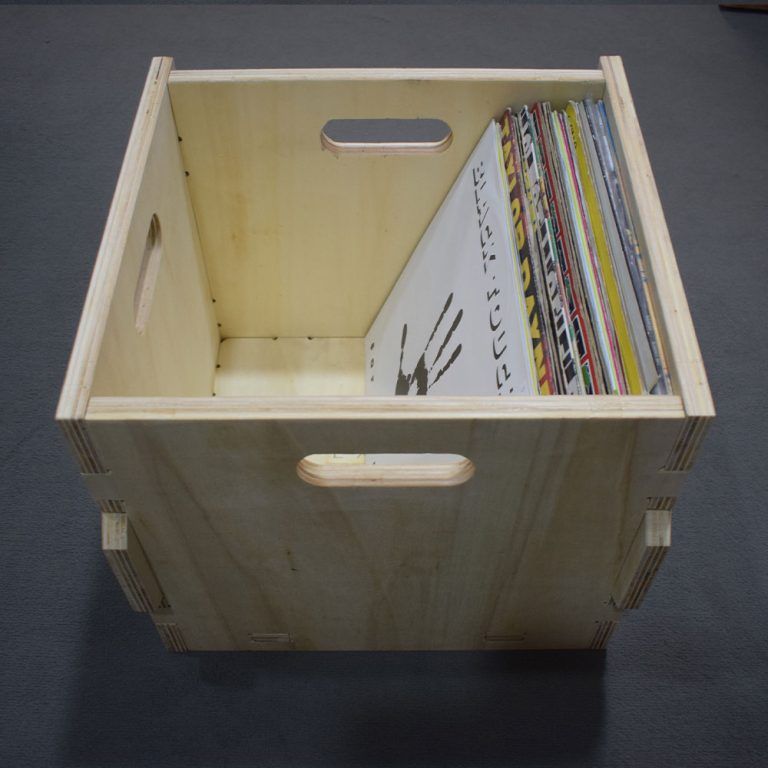
Upright, never stacked.
This is the most important rule. A vinyl record is thin and, under constant weight, slowly warps. If you stack records on top of each other, the ones at the bottom carry the weight of all the others and sooner or later they warp. A warped record makes the stylus ride up and down and never goes flat again.
Records should be kept vertical, side by side. They need to stand straight without being squeezed: too tight and they are hard to pull out and the sleeves get damaged, too loose and they lean and bend over time. When the space is not full, a divider or a few books keep the row upright.
The measurements of good record storage.
An LP sleeve measures about 31.5 × 31.5 cm. A record compartment should therefore be at least 32-33 cm high and deep; a few extra centimetres make it easier to pull them out. In width, roughly 25-30 records fit in 10 cm.
Weight matters too. An LP with its sleeve weighs between 200 and 300 grams: a hundred records easily exceed 20 kg. A thin or overly long shelf will sooner or later sag under that weight.
My record storage. In the Vinyl the record shelf is 39 cm high and carries 40 kg, with steel rods that keep the records upright. The Cube is 35 × 32 × 32 cm inside and combines with other modules as the collection grows.
Away from sun, heat and humidity.
Enemy number one is heat. A radiator, a stove or sun through the window can warp a record in a single afternoon. Keep your records in a lived-in room, where the temperature stays stable, away from heat sources.
Humidity does damage too: sleeves stain and buckle, and mould can appear. Damp cellars and lofts that turn into ovens in summer are the worst places for a collection.
Inner and outer sleeves.
The original paper inner sleeves protect the record, but over time they can scuff the surface and leave residue. Anti-static inner sleeves cost little and keep the record cleaner. A clear outer sleeve protects the cover from dust and wear, especially on records you play often.
How to handle a record.
Hold the record by the edge and the centre label, without touching the grooves: fingers leave grease that traps dust. Put it back in its sleeve right after playing, and do not leave it on the turntable or lying around unprotected.
Before each play a pass with a carbon-fibre brush is enough. For second-hand or very dirty records there are cleaning fluids and record-cleaning machines made for the job.
In order, and on show.
An organised collection gets played more. Many people sort records by genre and then by artist; others keep the records of the moment next to the turntable. In open record storage the spines and sleeves stay in view, and choosing what to play becomes part of the pleasure.
Frequently asked questions.
Should records be stored upright or flat?
Upright, always. Stacked, the weight of the records above warps the ones below, and a warped record never goes flat again.
How much space do records need?
A compartment at least 32-33 cm high and deep, because an LP sleeve is about 31.5 cm. In width, roughly 25-30 records fit in 10 cm, depending on the sleeves.
How much do records weigh?
An LP with its sleeve usually weighs between 200 and 300 grams. A hundred records easily exceed 20 kg: the shelf has to carry them without bending.
Where should records not be kept?
Near radiators, stoves and sunny windows, in damp cellars and in lofts that get hot in summer. Heat warps the records, humidity ruins the sleeves.
Are paper inner sleeves fine?
They do the job, but over time they can scratch the record and leave dust. Anti-static inner sleeves are a small investment that protects a lot.